

Sand Filter Guide: Pool Filter Types, Media & Cleaning
The Ultimate Guide to Pool Filters: Media Upgrades, Maintenance, and Maximizing Water Clarity
Clear pool water takes more than balanced chemicals. Your pool filter moves water through the system and traps dirt, debris, and other particles that can make water look cloudy. Many pool owners struggle with water clarity because they are not sure how pool filtration works, which filter media to choose, or how to maintain the system. If you are replacing old equipment, planning a new setup, or comparing the best sand for pool filters, it helps to know your options. This guide explains the main types of pool filters, compares common filter media, and covers high-performance choices like Micron1. You will also learn simple maintenance steps that can help your filter run well and last longer.
Understanding Pool Filter Types and Micron Ratings
What is a Micron?
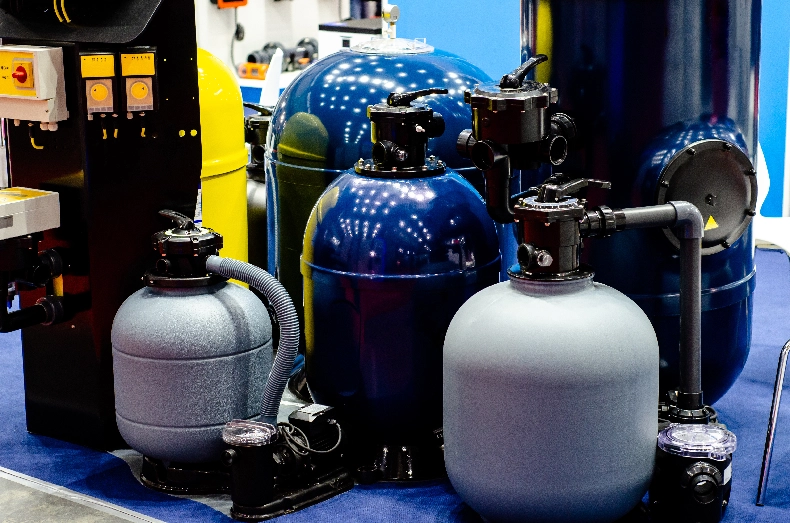
Before you compare pool filter systems, it helps to know what a pool filter does. A pool filter removes suspended particles from the water. Its performance is measured in microns. A micron, or micrometer, is one-millionth of a meter. For scale, visible debris like sand or grit typically ranges from about 100 to 1,000 microns, while a human hair is much finer at roughly 20 to 180 microns wide. Many contaminants that affect water clarity are even smaller. For example, parasites like Cryptosporidium measure around 4 to 6 microns, and Giardia falls between 8 and 12 microns. By comparison, the human eye usually cannot see particles smaller than about 40 to 100 microns, which is why water can appear clear even when very fine debris is still present. In general, a lower micron rating means a filter is designed to catch smaller particles. But micron ratings only tell part of the story. They describe particle size, not everything a filter can remove. The right choice also depends on water flow, maintenance, and your pool environment. There are three main types of pool filters, and each handles particle size differently.
Cartridge Filters
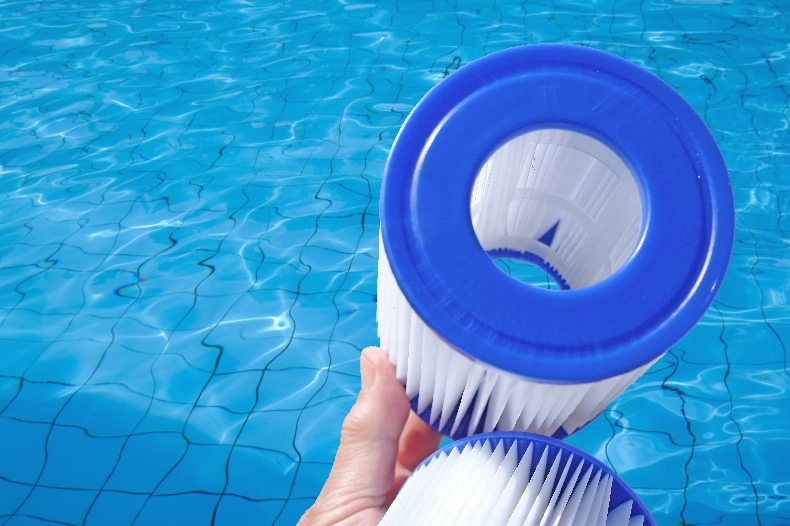
Cartridge pool filters use a pleated fabric cartridge to catch dirt and debris as water flows through the system, typically filtering particles in the 10 to 20 micron range. One of their main advantages is that they do not require backwashing, which helps conserve water and pool chemicals, and they perform especially well at lower flow rates, making them a strong match for variable-speed pool pumps. However, the cartridge must be removed and rinsed by hand on a regular basis, and most cartridges need to be replaced every 1 to 3 years depending on pool usage.
Diatomaceous Earth (DE) Filters
DE (diatomaceous earth) filters are one of the most powerful options in traditional pool filtration, using grids coated with a fine powder made from fossilized diatoms—microscopic aquatic organisms. They typically filter particles in the 3 to 5 micron range, delivering excellent water clarity and the ability to capture very small debris, including many types of algae. However, DE powder must be handled carefully since it can be harmful if inhaled, and these systems generally require more maintenance than other filter types, as fresh DE powder needs to be added after each backwash and overall upkeep costs tend to be higher.
Sand Filters
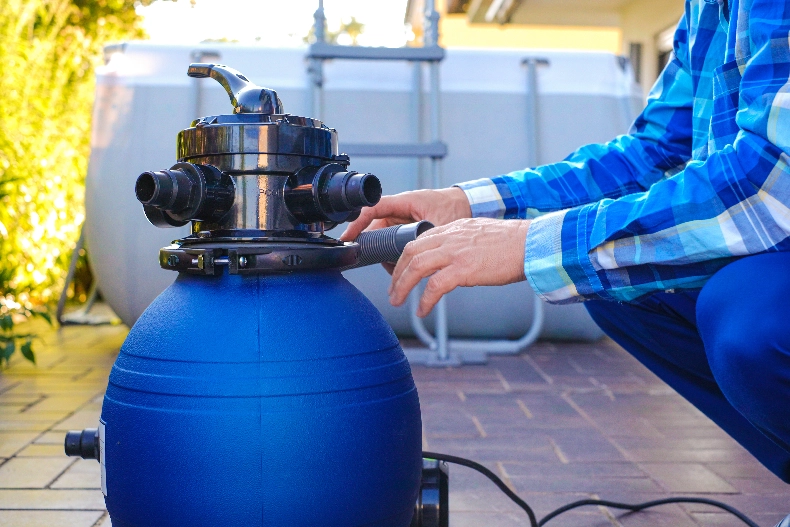
A sand filter is a popular choice for residential pools because it is durable, simple to use, and budget-friendly. Pool water enters the top of the tank, moves down through the filter media, and exits through laterals at the bottom, trapping dirt and debris along the way. With standard #20 silica sand, these filters typically capture particles in the 20 to 40 micron range. They are known for their low maintenance, straightforward operation using a multiport valve, and long-lasting performance. However, because sand has a higher micron rating than other filter types, smaller particles can pass through the system.
The Deep Dive: Why Sand Filters Remain a Top Choice
Sand filters have a higher micron rating with traditional media, but they are still a top choice for many pool owners. The reason is simple: they are reliable, easy to use, and low maintenance. If you want solid pool performance with less upkeep, a sand filter system is often a smart option. A multiport valve lets you switch between filtering, backwashing, rinsing, and draining with one handle. You do not have to deal with heavy grids or delicate cartridge pleats. Also, a “sand filter” does not always have to use sand. Many models can use upgraded filter media instead. Traditional silica sand usually filters particles around 20–40 microns, but other media can improve water clarity and last longer. With the right media, a sand filter can deliver stronger performance and better long-term value.
Exploring Your Sand Filter Media Options
Standard Silica Sand
This is the traditional filter media, using specially graded #20 silica sand designed for pool filters, and it typically captures particles in the 20 to 40 micron range. As water moves through the filter, the rough edges of the sand trap dirt and debris; however, over time these edges wear down and become smooth, allowing more particles to pass through and potentially causing the water to appear cloudy. One of the main drawbacks is that standard silica sand does not effectively capture very small particles—such as green algae, which is often around 5 to 10 microns—so sand alone may not fully remove it.
Zeolite
Zeolite is a natural mineral, often derived from volcanic rock, and it functions more like an absorbent sponge than standard sand, typically filtering particles in the 2 to 5 micron range. Its honeycomb-like structure allows it to trap very small debris while also absorbing ammonia compounds, which can help reduce chloramines, strong pool odors, and skin irritation. An added advantage is that zeolite is lightweight, so you only need about half as much by weight compared to silica sand (for example, 50 pounds of zeolite can replace 100 pounds of sand) and it generally lasts between 5 and 7 years.
Filter Balls
FilterBalls are a lightweight filter media made from polyester fibers that typically capture particles in the 5 to 15 micron range. One cubic foot of FilterBalls can replace up to 100 pounds of sand, and because they do not pack tightly, they allow for improved water flow through the filter. This can result in up to a 45% higher flow rate, potentially reducing strain on your pool pump and improving overall energy efficiency. Additionally, FilterBalls are hydrophobic, meaning they attract dirt and oils rather than holding water, which helps minimize clumping and channeling. They generally have a lifespan of about 4 to 5 years.
Recycled Glass Media
Recycled glass media is a popular upgrade for pool owners looking for improved water clarity and longer-lasting performance, typically filtering particles in the 3 to 5 micron range. Made from crushed, polished, and sterilized recycled glass, it carries a slight negative charge that helps attract and capture fine debris. Unlike traditional sand, glass media uses the full depth of the filter bed rather than just the top layer, which helps reduce channeling, often requires shorter backwash cycles, and can last 10 to 15 years before needing replacement.
Our Top Recommendation: Why Doheny’s Micron1 Stands Out

If you’re looking for the best balance of performance, efficiency, and long-term value, upgrading to premium glass media like Micron1 is a smart choice. This eco-engineered filter media allows a standard sand filter to perform at a much higher level, capturing particles down to 1 micron compared to the 20–40 microns typical of silica sand and even outperforming standard glass media (3–5 microns). Beyond finer filtration, Micron1 is 100% bio-resistant and self-sterilizing, meaning it prevents the buildup of bacteria and biofilm inside the filter so your sanitizer can work more effectively in the pool water itself. It’s also lighter and less dense than traditional sand, requiring about 15–20% less media by weight and using up to 50% less water during backwashing, which helps conserve both water and pool chemicals. While standard sand typically needs replacing every 3–5 years, Micron1 lasts 10 years or more, making it a more cost-effective and low-maintenance solution over time.
How to Choose the Best Filter and Media for Your Setup
With so many options available, the right choice comes down to your pool setup, environment, and maintenance style.
Consider Your Environment
Your surroundings play a big role in filtration needs. Pools in dusty areas or near trees need systems that can handle heavier debris loads without clogging too fast. Standard silica sand filters particles around 20–40 microns, while upgraded media like glass, zeolite, or other alternatives can catch finer debris and may reduce how often backwashing is needed.
Size Your Filter Correctly
Even the best filter media will not perform well if your filter system is undersized. Start by estimating your pool’s volume using the calculator below, then match your system’s flow rate (GPM) and turnover rate--how long it takes to circulate all the water--to your pool’s needs. Your pump must be able to deliver the required flow, your filter must be able to handle that flow without excessive pressure, and the overall filter size should align with your pool volume. If your filter pressure rises quickly or you find yourself cleaning or backwashing more often than expected, your system may be undersized, and upgrading to a larger filter can improve efficiency, reduce maintenance, and help maintain clearer water.
Consider Maintenance Preferences
Think about how hands-on you want to be. Sand filters are popular because they are simple and low maintenance. Upgraded media can extend cleaning intervals and reduce backwashing frequency, making them a strong choice for pool owners who want less routine work.
Compare Upfront Cost vs. Long-Term Value
Standard silica sand is the most affordable option upfront, but it typically needs to be replaced every 3 to 5 years. Other filter media may have a higher initial cost, but they often last significantly longer and can help reduce water use and maintenance over time—for example, zeolite usually lasts 5 to 7 years, glass media can last up to 10 years, and Micron1 may last 10 years or more. Because of this, long-term savings are often achieved through fewer media replacements and improved filtration efficiency.
Match Filtration Performance to Your Goals
Micron ratings show the size of particles a filter is designed to capture, with lower ratings indicating the ability to remove smaller debris. Standard sand typically filters particles in the 20–40 micron range, cartridge filters generally capture particles around 10–20 microns, and DE filters can filter down to approximately 3–5 microns. Upgraded sand media, such as glass or other advanced options, can often provide even finer filtration. While finer filtration can improve water clarity, it may also cause pressure to rise more quickly in pools with heavy debris loads. The best choice depends on finding the right balance between water clarity, flow rate, and maintenance needs.
Address Specific Water Issues
If you frequently deal with cloudy water, fine debris, or chemical odors, your filter media choice can make a significant difference. Zeolite can help reduce ammonia compounds and unwanted odors, while glass and other advanced filtration media can improve the removal of fine particles that affect water clarity. Standard sand remains a reliable option for handling general debris, but it is less effective at capturing very small particles that can contribute to cloudy water.
How to Clean and Maintain a Sand Pool Filter
Even the best filter media will not perform well without proper maintenance. Keeping your sand filter clean helps maintain water clarity, improve circulation, and extend the life of your equipment.
Routine Maintenance: Backwashing
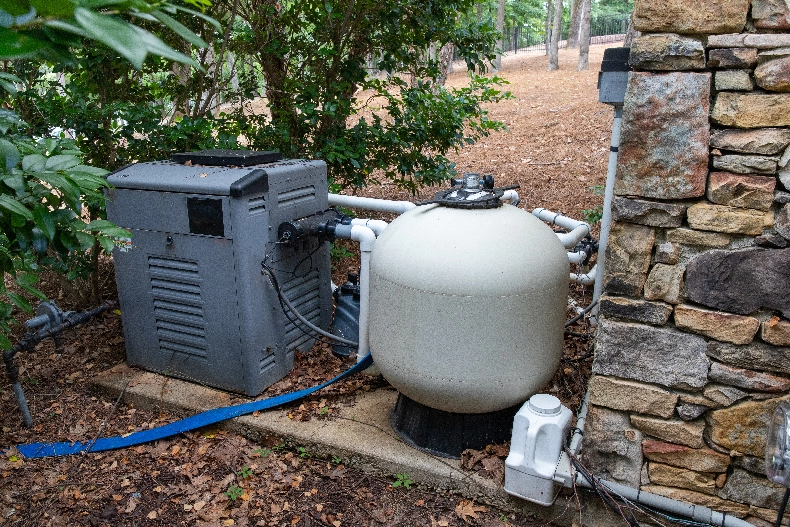
The main way to clean a sand filter is through backwashing, which reverses the flow of water through the system to flush out trapped dirt and debris. You should backwash when the filter pressure rises about 8-10 PSI above its normal starting pressure. During the process, dirty water is discharged through the waste line until it runs clear, followed by a quick rinse cycle to help reset the filter bed before returning the system to normal operation. While backwashing is a simple and effective way to remove accumulated debris, it only cleans surface buildup and does not remove oils, scale, or deeper contaminants that may collect within the filter media.
Periodic Deep Cleaning
Over time, sunscreen, body oils, and minerals can build up inside the filter. This can cause the media to clump together, leading to channeling, where water flows through open paths instead of being filtered evenly. To help prevent this, it is a good idea to chemically clean your sand filter once or twice per season using a product made to break down oils and scale. This helps restore proper water flow and filtration efficiency.
When to Replace and Refresh your Sand Filter
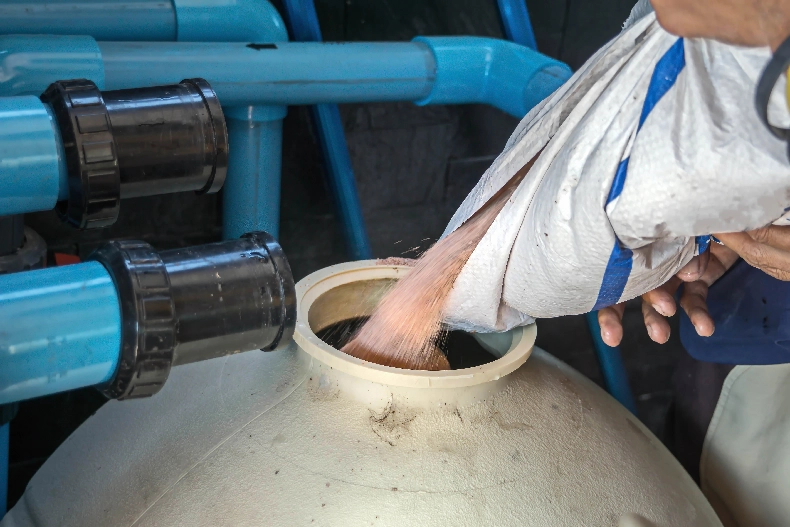
Filter media does not last forever, and over time, sand and other filtration materials gradually wear down and lose their ability to effectively trap dirt and debris. If you start noticing cloudy water, shorter filter cycles, or rising pressure even after proper cleaning, these are strong signs that your filter media may be worn out and due for replacement. While replacing filter media requires a bit more effort than routine maintenance, it is a manageable process when approached step by step. Begin by fully shutting off and depressurizing your system, then carefully remove the old media to avoid damaging internal components. Take this opportunity to inspect key parts like the laterals and standpipe to ensure they are still in good condition. Before adding new media, partially fill the tank with water to help cushion and protect these internal components, then refill with the correct type and amount of filter media to restore proper filtration performance.
Final Thoughts on Upgrading Your Pool's Performance
Your pool filter plays a major role in keeping water clean and clear. Standard equipment and traditional silica sand still work well for many pools, but newer filtration media can make it easier to improve clarity, reduce maintenance, and use water more efficiently. Whether you stay with the basics, move to a mineral media like zeolite, or upgrade to a bio-resistant option like Doheny's Micron1, the best choice depends on your pool, your budget, and how much maintenance you want to handle. By choosing the right filter media for your setup and keeping up with backwashing and deep cleaning, you can keep your pool water clear and your equipment working at its best all season long.